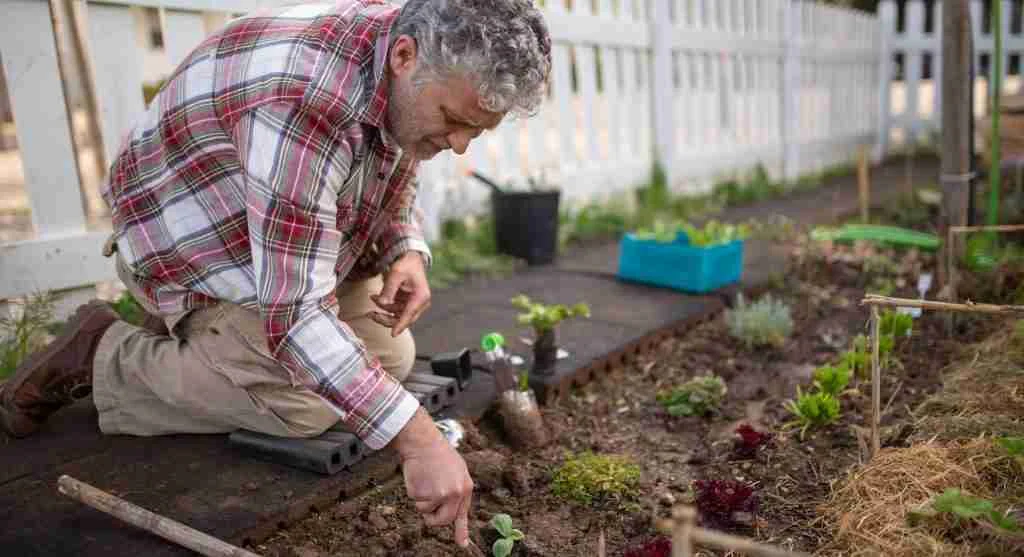


Useful planting tips can help backyard gardeners solve a frustrating early-season problem without creating a second one later. A row is planted carefully, the first seedlings come up, and then the pattern becomes obvious: one section looks full, another section is patchy, and a few stretches seem nearly empty. The natural reaction is to plant into every weak spot immediately. That instinct makes sense, but it can also turn one simple row into a confusing line of seedlings at several different ages.
Some refill planting helps. Too much refill planting creates its own trouble. Watering becomes uneven, harvest timing gets messy, and the row stops behaving like one planting. These planting tips focus on how to handle uneven germination in a smarter way, when to refill thin rows and when to leave them alone, and how to keep one planting from turning into a mixed-age strip that becomes harder to manage all season.
Not Every Gap Is a Problem That Needs Immediate Fixing
One of the most helpful things a gardener can learn is that a thin-looking row is not automatically a failed row. Some spaces only look large because the surrounding seedlings are still small. Some seeds are a little slower than others. Some crops will spread enough later that a small early gap matters less than it first appears.
This is why good planting tips often begin with patience instead of action. Refilling too quickly can create more long-term disorder than the original gap would have caused. The first step is figuring out whether the row is truly underplanted or just not finished revealing itself yet.
The Timing of the Refill Decision Matters More Than Many Gardeners Expect
If refill planting is going to happen, timing matters. Very early refill attempts often blend more naturally into the original row. Late refill attempts usually stand out much more. Once the first seedlings already have a clear size advantage, any new seed or transplant dropped into the gaps may stay behind for a long time and create a row with multiple working stages.
That means the best refill window is often fairly short. The gardener needs enough time to judge what truly failed, but not so much time that the original row has already moved too far ahead. One of the strongest planting tips for uneven germination is learning to act during that middle window instead of at the first sign of worry or long after the row has clearly separated into age groups.
Short Weak Sections Usually Deserve a Different Decision Than Long Empty Sections
A row with one or two small weak patches is different from a row with a whole long section missing. Tiny scattered gaps often do not justify major refill work, especially if the surrounding plants will widen or if the crop is not extremely spacing-sensitive. Long open stretches are more likely to affect the usefulness of the bed later and may deserve more active correction.
This distinction helps the gardener respond with more precision. Instead of thinking “the row failed” or “the row succeeded,” it becomes possible to see degrees of success. That usually leads to better refill decisions and a cleaner final layout.
Refilling With the Same Crop Is Not Always the Best Fix
Many gardeners assume the only solution is to reseed the exact same crop into the gap. Sometimes that works. Sometimes a better answer is a quicker, smaller crop that can use the empty space without pretending it belongs to the original planting age. This is especially useful when the row is already too far ahead for a same-age look to be realistic.
That choice depends on the crop, the space, and how the bed will be managed later. One of the smartest planting tips is recognizing that correction does not have to mean imitation. The gap may need productivity, but it does not always need a delayed copy of what was first planted there.
Mixed-Age Rows Change Watering and Harvest More Than People Expect
When a row contains older plants, newer refill seedlings, and perhaps one untouched gap, the work becomes more complicated very quickly. The older section may need one kind of watering rhythm while the new section still needs gentler support. Harvest readiness may arrive unevenly. One part of the row may start shading another before the later plants are well established.
This is why refill planting should be judged not only by whether it fills space, but by whether it keeps the row workable. A perfect-looking row from one angle may be much less practical once the season moves forward.

Some Crops Forgive Uneven Germination Better Than Others
Not every row needs perfect correction. Some crops still look and perform reasonably well even when the stand is not exact. Others become awkward quickly if spacing and age vary too much. This is where the gardener’s crop knowledge becomes more valuable than a general rule.
A forgiving crop may allow a few thin spots without much consequence. A crop grown for a clean uniform harvest may become far less convenient if refilling is done too late or too heavily. The best planting tips respect those differences instead of treating every row like it should be repaired in the same way.
It Is Sometimes Better to Improve the Bed Plan Than Rescue the Row
If a row repeatedly emerges unevenly in the same kind of section, the bigger lesson may not be about refilling at all. It may be about how that part of the bed holds moisture, how seed depth was handled, or whether the surface condition was truly even. In that case, the wisest response is not to keep patching the row, but to improve the setup that keeps producing the thin spot.
This shift in thinking saves a lot of frustration. Instead of treating each weak germination patch like a separate surprise, the gardener starts improving the conditions that create those patches in the first place.
Keep Notes on Which Rows Were Worth Refilling
One of the most practical long-term habits is to record which refill attempts actually improved the row and which ones only created confusing mixed-age growth. Some crops may benefit from quick reseeding. Others may be better left alone or corrected with a different crop choice. The answers become much clearer once they are written down.
Over time, those notes help the gardener stop treating every gap the same way. They build a smarter sense of when refill planting adds real value and when it only adds visual comfort in the short term.
Frequently Asked Questions
Q: What are the best planting tips for uneven germination in a row?
A: The best planting tips include waiting long enough to judge the true gap, acting before the original row gets too far ahead, distinguishing between small scattered gaps and long empty sections, and avoiding refill planting that creates too many different growth stages in one row.
Q: Should gardeners refill every thin spot in a seed row?
A: No. Some small gaps do not affect the row enough to justify later mixed-age growth. A refill is usually most useful when the empty section is large enough to matter and the timing still supports a workable row.
Q: Why can refill planting create problems later?
A: Late refill planting often produces a row with several different ages, which can complicate watering, harvest timing, and spacing as the season moves forward.
Q: Is reseeding the same crop always the best correction?
A: Not always. Sometimes a smaller or quicker crop is a better use of the gap if the original row is already too advanced for a same-age refill to stay practical.
Key Takeaway
These planting tips show that thin germination spots should be handled with timing and judgment, not automatic reseeding. Some gaps deserve quick refill action, some should be left alone, and some are better corrected with a different crop entirely. Backyard gardeners who understand that difference usually end up with rows that are easier to water, easier to harvest, and far less confusing later in the season.