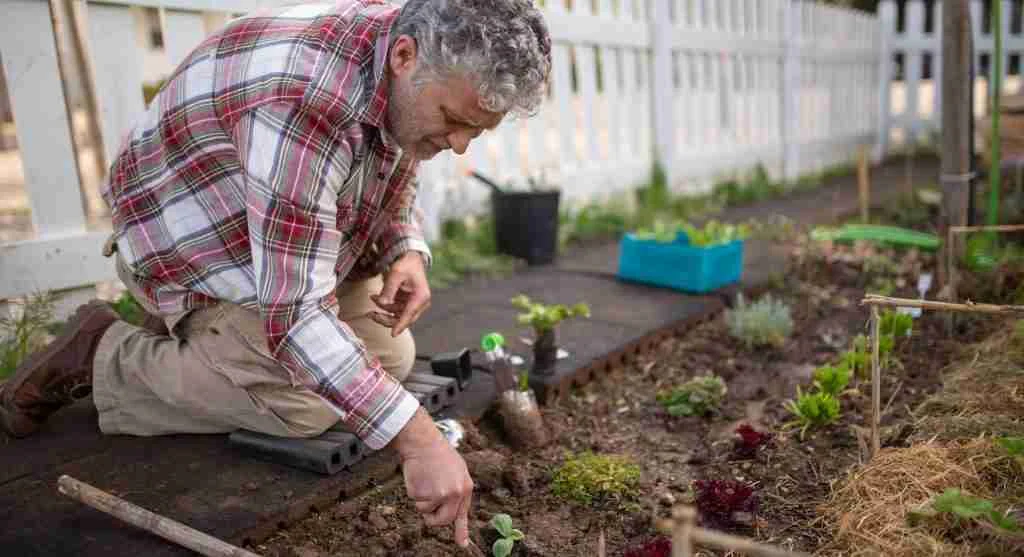


Useful planting tips can help backyard gardeners make better decisions about one of the easiest spaces to misuse: the corners of a bed. Corners often look like bonus planting zones. They seem open, practical, and too valuable to waste. But corner spaces do not behave like the middle of a row. They shape access, affect the bed’s outline, and influence how easy the whole planting will be to water, inspect, and harvest later.
Many messy beds begin with a small corner decision that looked harmless at the start. A crop was tucked into one edge, then spread into the walking space, leaned into the row beside it, or made the bed harder to read from that point forward. These planting tips focus on how to use garden bed corners wisely, how to choose crops that suit those edge spaces, and how to keep the whole layout organized instead of letting the corners quietly distort the plan.
Corner Space Is Real Space, but It Is Not Neutral Space
A corner may seem like leftover room, but it is actually one of the most influential parts of the bed. It marks where rows begin or end, where paths turn, and where the eye understands the shape of the planting. Because of that, whatever is placed there changes more than that one small patch of soil. It affects how the whole bed feels and functions.
This is why strong planting tips often treat corners more carefully than open middle sections. A middle-row mistake can stay local. A corner mistake often spreads its effect into access, watering, and visual order all at once.
The Best Corner Crops Usually Respect Boundaries
One of the most practical things a gardener can ask is whether the crop can stay inside the space the corner truly offers. Compact, upright, or easy-to-manage plants usually perform better there than crops that sprawl, widen heavily, or lean outward into paths. A good corner crop does not only grow well. It stays in agreement with the edges around it.
That makes crop choice much more important than it first appears. A plant that looks modest at transplanting time can later turn the corner into a traffic point, a shade point, or a confusion point. The most successful corner plantings often begin with realistic limits instead of optimistic guesses.

Corner Planting Works Best When the Bed’s Main Purpose Still Stays Clear
Some beds are built around one main crop, one repeated pattern, or one strong layout rhythm. A corner planting should support that purpose rather than compete with it. If the corner crop becomes the first thing the gardener has to work around, the bed may already be losing its original shape.
One of the smartest planting tips for corners is to ask whether the corner planting fits the bed’s main job. If the answer is yes, it often improves the bed. If the answer is no, the corner may be creating a second design inside the first one, and that usually leads to disorder later.
The First Few Steps Around the Bed Should Still Feel Easy
Corner decisions often reveal themselves through movement. If the gardener now has to step around one corner more carefully, avoid brushing a spreading plant, or reach awkwardly to begin watering the nearest row, the corner crop is already affecting more than its own footprint. A well-used corner should not change the bed’s simplest movements in a negative way.
That is why organized backyard layout depends as much on body flow as on spacing. The bed should still welcome the gardener naturally from all working sides. If one planted corner interrupts that flow, it may have been used too aggressively.
Corner Crops Need Their Own Light Reality
Not every corner receives the same conditions as the middle of the bed. One corner may sit close to a fence. Another may catch extra reflected heat from a path or wall. Another may receive partial shade from taller plants during part of the day. A crop that thrives in the center of the bed may not respond the same way at the edge.
One of the strongest planting tips is reading the corner as its own micro-space. The crop should match the corner’s actual light and exposure pattern, not the general identity of the whole bed. That small adjustment often prevents later disappointment.

Simple Corner Layouts Usually Outperform Clever Ones
Corners can tempt gardeners into trying special combinations, extra companions, or decorative mini-layouts. Sometimes those ideas work, but often the best corner planting is a very simple one. A clear single crop or one compact useful planting usually holds shape better than a mixed corner experiment that becomes harder to read and harder to manage.
This is not because variety is always bad. It is because corners already carry structural importance. Simplicity protects that structure. A clean corner decision often helps the entire bed stay calmer and more legible through the season.
Empty Corners Are Not Always Wasted Corners
One of the most underrated planting tips is knowing when a corner serves the bed best by staying open. An unplanted corner can preserve turning space, make watering easier, keep a row readable, or reduce edge crowding where growth is already likely to expand. Not every blank corner is a missed opportunity. Sometimes it is part of a strong layout.
Gardeners often feel pressure to use every bit of soil, but productivity is not only about filling space. It is also about keeping the planting easy enough to care for well. An open corner may support more total success than a crowded one.
Keep Notes on Which Corners Stayed Helpful
Some corner plantings work beautifully. Others start well and become inconvenient by midseason. One of the best long-term habits a gardener can build is noting which corner crops stayed within bounds, which ones distorted the bed edge, and which corners were better left open. That record becomes more valuable every year.
Over time, those notes turn corner planting from guesswork into judgment. The gardener learns which edge spaces truly welcome a crop and which ones only look available in the early weeks.
Frequently Asked Questions
Q: What are the best planting tips for garden bed corners?
A: The best planting tips include choosing compact crops, protecting the bed’s overall layout, keeping movement easy around the edges, matching the crop to the corner’s real light conditions, and knowing when an open corner serves the bed better than a planted one.
Q: Why do bed corners often become messy later in the season?
A: Bed corners often become messy when a crop placed there grows wider, spills into the path, alters access, or visually competes with the main structure of the bed more than expected.
Q: Should every open garden bed corner be planted?
A: No. Some corners are more useful as access space, turning space, or visual structure. Planting every corner can reduce the bed’s overall function if those edges are needed for easier care later.
Q: What types of crops usually fit corners best?
A: Crops that stay compact, upright, or easy to control usually fit corners best because they respect the bed’s boundaries and do not interfere as much with watering, harvest, and movement.
Key Takeaway
These planting tips show that bed corners should be handled with more care than they first seem to need. Because corners influence access, layout, and how the bed is read, the smartest choices are usually compact, simple, and respectful of the whole design. Backyard gardeners who treat corners as structural spaces instead of leftover spaces usually end up with beds that stay far easier to manage all season.